5 Essential Things to Know Before Building a Home in Kathmandu
Thinking of building your dream home in Kathmandu? Congratulations! It’s an exciting journey, but one that requires careful planning, legal navigation, and a deep understanding of the local landscape. Before you grab your shovel, here are five crucial things you absolutely need to know:
Land Ownership and Legalities: Navigating the Red Tape
This is arguably the most critical and potentially complex step. Land ownership in Kathmandu, as in the rest of Nepal, comes with a set of distinct rules.
- Foreign Ownership is Limited: This is the big one. Generally speaking, foreign nationals are not permitted to own land in Nepal. There are some very specific and restricted exceptions, but for the vast majority of cases, this is a firm “no.” This means if you’re an expat dreaming of building your own home, you’ll likely need to explore other options.
- Property Taxes are Real: Once you do own land or a home, be prepared for property taxes. These are typically levied annually and are based on the registered value of the land and any improvements (like a house). Understanding and budgeting for these ongoing costs is essential.
- Title Verification is Key: Before parting with any money, meticulously verify the land’s title deeds. Make sure the title is clean and free of any disputes or liens. Employing a trusted local lawyer and perhaps a real estate agent is highly recommended to guide you through this process.
Building Permits and Regulations: More Than Just a Formalities
Kathmandu, like any municipality, has strict zoning and building codes. Don’t fall into the trap of thinking you can build whatever you want, however you want.
- Zoning Laws Matter: Kathmandu is a large municipality and different areas are zoned for specific uses. Before you fall in love with a piece of land, check the local zoning laws to ensure that building a residential property is permitted in that specific area. For instance, some areas may be designated for commercial use or have restrictions due to environmental concerns.
- The “Lal Purja” is Your Holy Grail: This is the official certificate of land ownership. You won’t get a building permit without it. Make sure your Lal Purja is valid and up-to-date.
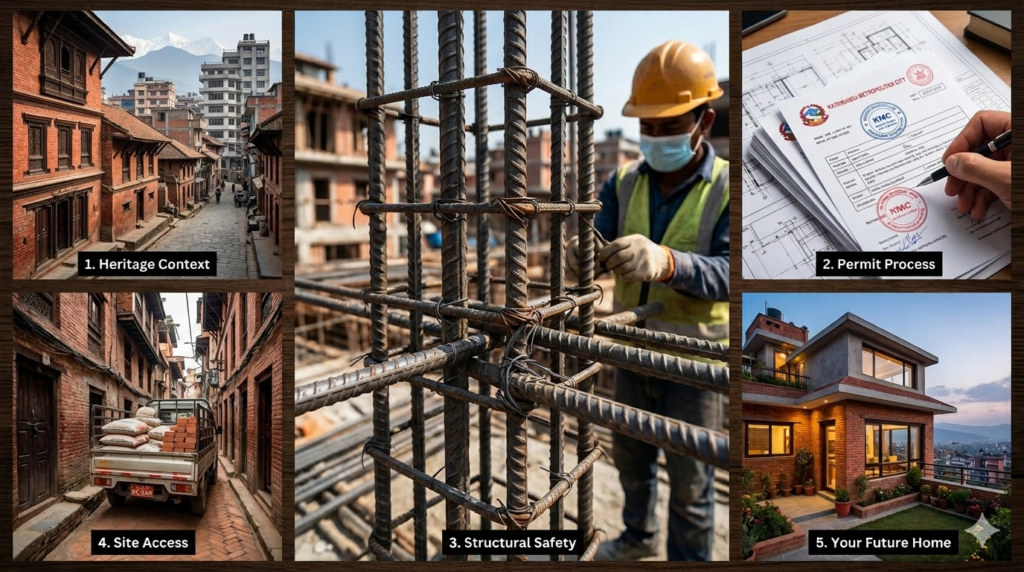
- Adhere to Codes for Safety and Quality: Building codes aren’t there to be bureaucratic; they’re there for your safety. Following these codes ensures your home is structurally sound, adheres to safety standards (especially crucial in a seismically active region), and meets requirements for essential utilities. Skipping this step can lead to significant problems, from unsafe living conditions to legal and insurance issues down the line.
Construction Costs and Budgeting: A Moveable Feast
Let’s face it: construction costs in Kathmandu can be a roller coaster. There are several factors at play that can significantly impact your budget.
- Inflation and Location are Big Factors: Inflation can drive up the cost of materials, and location matters immensely. Land in a highly sought-after area like Maharajgunj or Pulchowk will be vastly more expensive than land in the developing suburbs.
- Materials and Labor: The Core Costs: This is where the bulk of your budget will go. Expect to pay a premium for imported or high-end materials. When budgeting, consider not just the cost of materials but also the cost of skilled labor, which can vary depending on experience and demand.
- Permits and Fees are Part of the Package: Don’t forget to budget for all the official costs – the fees for your building permit, any architectural design costs, and potentially the cost of connecting to essential utilities. It’s best to overestimate this category slightly to avoid unpleasant surprises.
Utilities and Infrastructure: Don’t Take Them For Granted
Connecting to essential utilities in Kathmandu can sometimes be a test of your patience and your wallet.
- Water and Sewage: A Classic Challenge: Kathmandu has a long-standing history of water scarcity. Getting a reliable water connection can be difficult and may require you to invest in a deep tube well or rely on water tankers. Similarly, sewage systems in many parts of the city are either non-existent or inadequate. This means you might need to install your own septic tank system.
- Electricity: A Tale of Limited Connections: While electricity access is generally good in Kathmandu, getting a new connection can still involve bureaucratic hurdles and potential delays. Be prepared to navigate the process with the local electricity authority.
Architectural Style and Aesthetics: Making It Yours
Kathmandu has a unique and rich architectural heritage. When designing your home, you have an opportunity to contribute to this tapestry.
- Blend Modern Comforts with Local Charm: You can create a home that is modern, comfortable, and functional while also reflecting the local style. This could involve incorporating elements of traditional Newari architecture, using local materials like brick and stone, or designing a home that seamlessly blends with the surrounding landscape.
- Hire a Local Architect: This is invaluable. A skilled local architect will not only understand your vision but will also possess deep knowledge of local building codes, traditional styles, and the nuances of the local construction landscape. They can help you design a home that is both beautiful and functional.
Building a home in Kathmandu is an ambitious yet potentially rewarding project. By understanding these five key areas, you’ll be well-prepared to navigate the challenges, make informed decisions, and ultimately, build the home you’ve always envisioned. Remember to do your research, seek out trusted professionals, and most importantly, be patient. The process may be long, but the result – a beautiful home in the heart of this vibrant city – is well worth it. Good luck on your building adventure!